
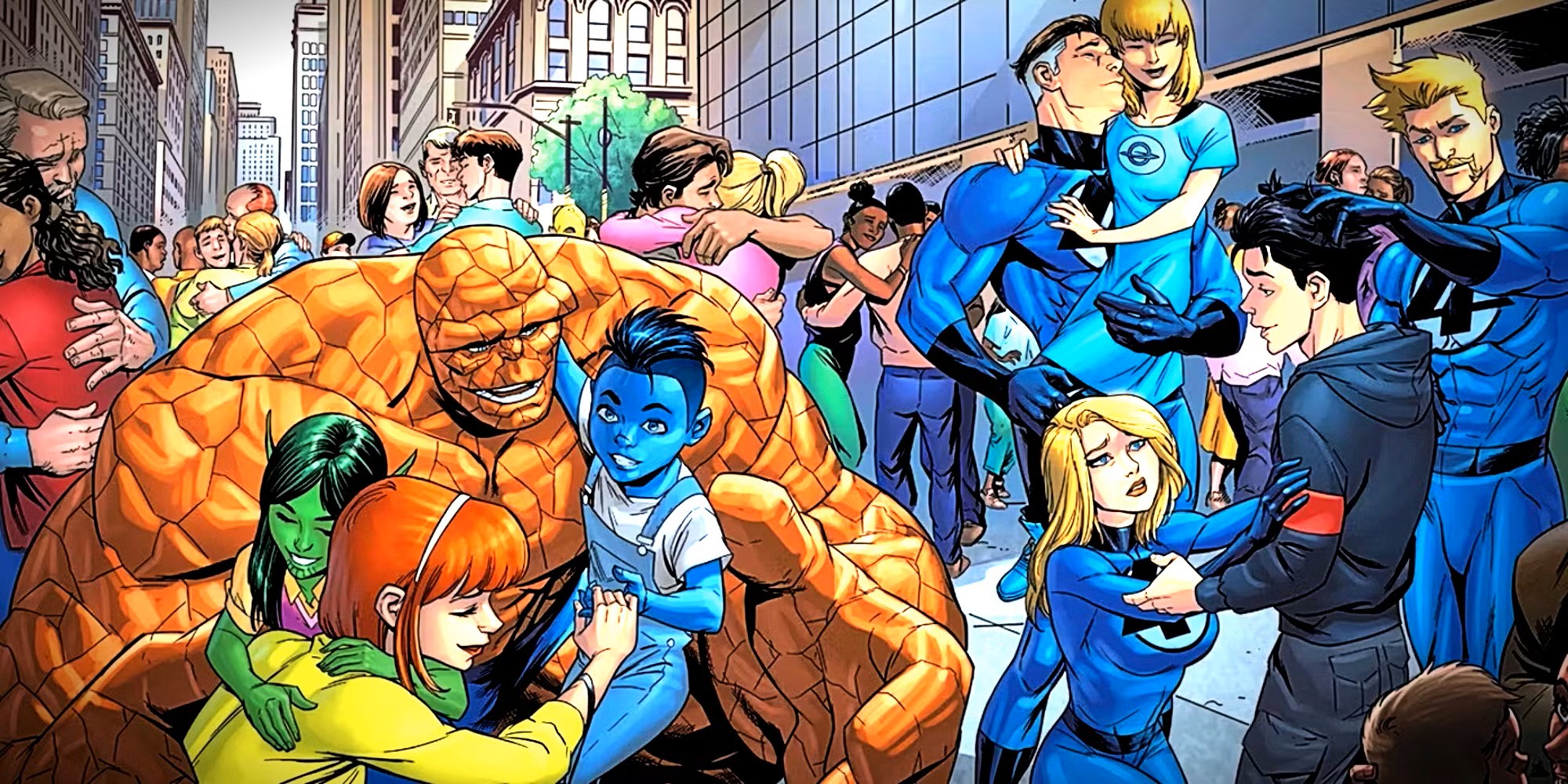
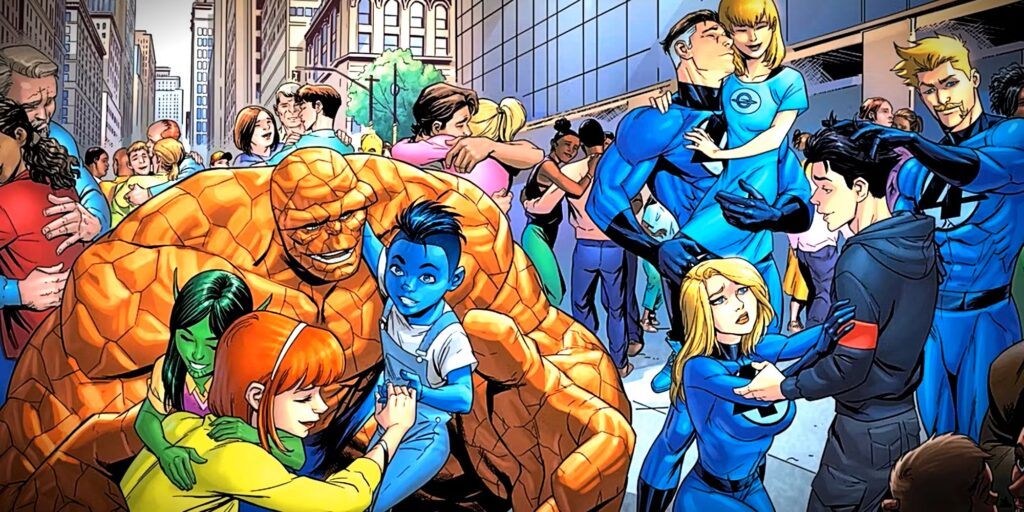
Marvel’s First Family has grown far beyond the original four heroes. Over the decades, marriages, children, and adoption transformed the Fantastic Four into one of the most enduring families in comics.
Some of my earliest Marvel memories didn’t come from comic books. They came from watching the Fantastic Four cartoon as a kid. Long before I understood who Galactus was or why Doctor Doom became one of Marvel’s greatest villains, I knew there was something different about this group. They didn’t feel like four superheroes who simply worked together. They felt like a family.
That impression has stayed with me for decades. In fact, when I recently told my oldest granddaughter—a college student—that I was writing another article about the Fantastic Four, her face lit up.
“I love the Fantastic Four!” she said without hesitation.
It reminded me that, more than sixty years after their debut, the Fantastic Four still connect with new generations of fans.
I’ve often said that the Fantastic Four didn’t simply introduce a new superhero team when they debuted in November 1961—they launched the Marvel Age of Comics. In an earlier article, I explored why many fans consider them Marvel’s first superheroes of the modern Marvel era. While Timely Comics had introduced heroes such as the Human Torch, Namor, and Captain America decades earlier, the Fantastic Four marked the beginning of a new style of storytelling that transformed superhero comics and laid the foundation for the Marvel Universe we know today.
But launching the Marvel Age also earned them another distinction that has endured for more than sixty years: Marvel’s First Family.
At first glance, the nickname seems easy to explain. Reed Richards and Sue Storm fell in love and eventually married. Johnny Storm is Sue’s younger brother, while Ben Grimm is Reed’s oldest and most loyal friend. Over the years, their family expanded to include children, spouses, and even adopted children from two alien races locked in a centuries-old war.
But being related by blood or marriage isn’t what truly made them Marvel’s First Family.
Unlike most superhero teams, the Fantastic Four were allowed to grow. Readers watched Reed and Sue exchange wedding vows, raise Franklin and Valeria, and face the challenges of balancing family life with saving the world. They watched Ben Grimm struggle to accept his transformation into the Thing while finding unconditional love with Alicia Masters. They saw Johnny Storm mature from an impulsive teenager into a devoted brother, uncle, and trusted friend. Through every triumph and heartbreak, the Fantastic Four remained exactly what their name suggested—not just a team, but a family.
That was a radical idea in 1961. Stan Lee and Jack Kirby didn’t create flawless heroes who always had the right answers. They created people who argued, made mistakes, worried about one another, celebrated weddings and birthdays, mourned losses, and grew older together. For readers, it felt less like following superheroes and more like watching a real family grow up.
As I thought about my granddaughter’s excitement, it occurred to me that Marvel has introduced countless superhero teams since 1961. The Avengers have assembled. The X-Men have inspired generations. The Guardians of the Galaxy have become household names. Yet when people talk about Marvel’s First Family, everyone knows exactly who they mean.
I’ve often wondered why that nickname has endured when so many other superhero teams have come and gone.
Why?
The answer goes far beyond who appeared first in comics. It has everything to do with the family they became.
In this article, we’ll explore why the Fantastic Four are known as Marvel’s First Family by looking beyond their superpowers. From Reed and Sue’s enduring marriage to Ben and Alicia’s touching love story, from Franklin and Valeria Richards to Ben and Alicia’s adopted children, Jo-Venn and N’Kalla, we’ll see that the Fantastic Four’s greatest legacy has never been their incredible adventures alone. It has always been the family they built together.
The Fantastic Four Were a Family Before They Became Heroes
The Family Came First
One of the reasons the Fantastic Four have remained so popular for more than sixty years is that they didn’t begin as four strangers brought together by circumstance. Long before cosmic rays transformed them into superheroes, Reed Richards, Sue Storm, Johnny Storm, and Ben Grimm were already connected by friendship, love, and family. Even before cosmic rays changed their lives, those relationships had already become the foundation for everything that followed.
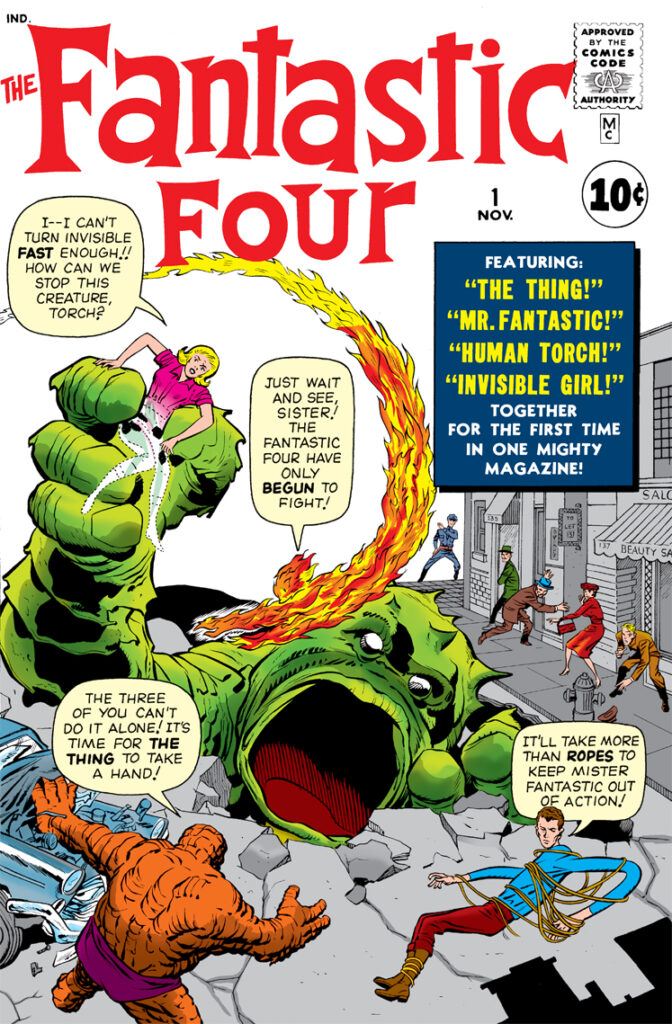
When Fantastic Four #1 debuted in November 1961, writer Stan Lee and artist Jack Kirby introduced readers to characters who already shared a history. Reed Richards was a brilliant scientist with an insatiable curiosity about the unknown. Ben Grimm was his longtime friend, former college roommate, and the one man Reed trusted to pilot his experimental spacecraft. Sue Storm loved Reed but wasn’t afraid to question his decisions when she thought he was taking unnecessary risks. Her younger brother, Johnny, completed the group, bringing youthful confidence, boundless energy, and the kind of playful mischief only a younger sibling can provide.
Those relationships made the Fantastic Four feel real before they ever put on matching uniforms.
One of the things I’ve always appreciated about the Fantastic Four is that they never felt like coworkers wearing matching costumes. Even in those earliest issues, they felt like people who genuinely cared about one another—and sometimes drove each other crazy. That’s exactly how real families work.
The Space Race Changed Everything
That realism was especially meaningful in 1961. America and the Soviet Union were locked in the Space Race, and each new achievement in space exploration captured headlines around the world. Lee and Kirby drew inspiration from that excitement by sending their characters into space aboard an experimental rocket. Reed believed they couldn’t afford to wait. Ben strongly disagreed, insisting the spacecraft wasn’t ready.
It would have been easy for Ben to walk away.
Instead, he climbed into the pilot’s seat.
Not because he believed Reed’s plan was without flaws, but because he believed in his friend.
That single decision speaks volumes about the relationship between Reed and Ben. Their friendship wasn’t built on always agreeing with one another. It was built on loyalty and trust—qualities that would be tested again and again throughout the decades.
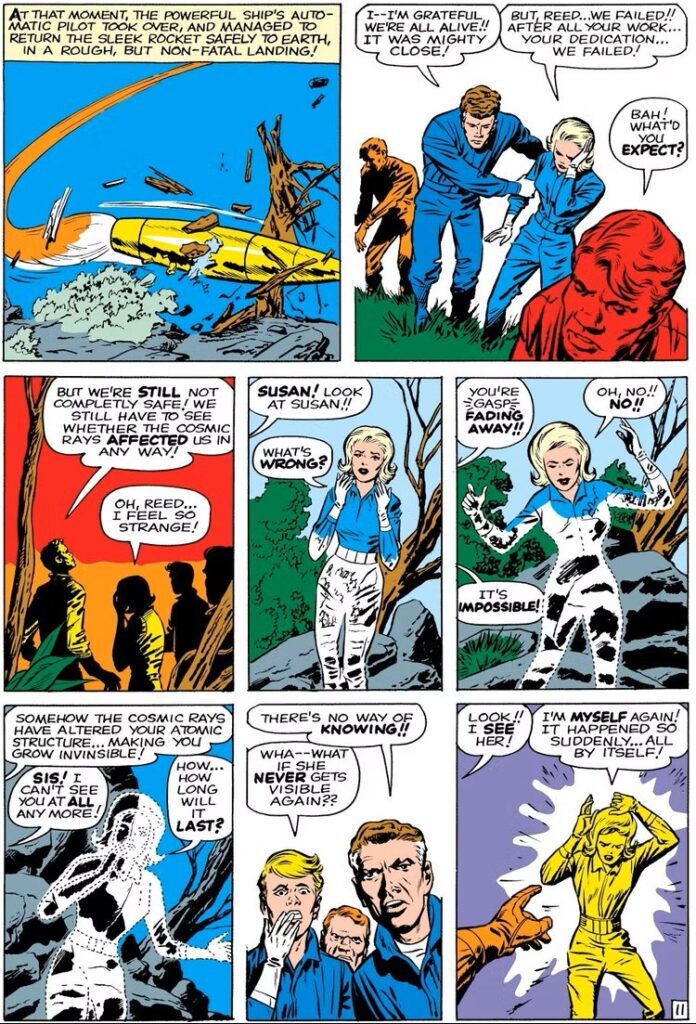
The mission ended in disaster. Bombarded by cosmic rays, the four returned to Earth forever changed. Reed gained the ability to stretch his body, Sue gained the power of invisibility, Johnny burst into flame and took to the skies, and Ben Grimm underwent the most heartbreaking transformation of all, becoming the Thing.
For many superheroes, that would have been the end of the origin story.
For the Fantastic Four, it was only the beginning.
Ben’s anger over losing his human appearance created tension that would shape the family for years. Reed never stopped blaming himself for what had happened to his closest friend and devoted countless hours to searching for a cure. Sue often became the steady voice that held everyone together, while Johnny’s humor and optimism helped lighten even the darkest moments. They argued. They disagreed. They frustrated one another. Yet when danger threatened, they stood together without hesitation.
That was something readers hadn’t seen before.
The Fantastic Four never pretended to be a perfect family. They laughed together, argued together, forgave one another, and kept moving forward together. That’s what made them feel so different from other superhero teams. The cosmic rays gave them extraordinary abilities, but they simply revealed the strength of the family that had been there all along.
Reed and Sue Changed Superhero Comics Forever
A Wedding That Changed Marvel
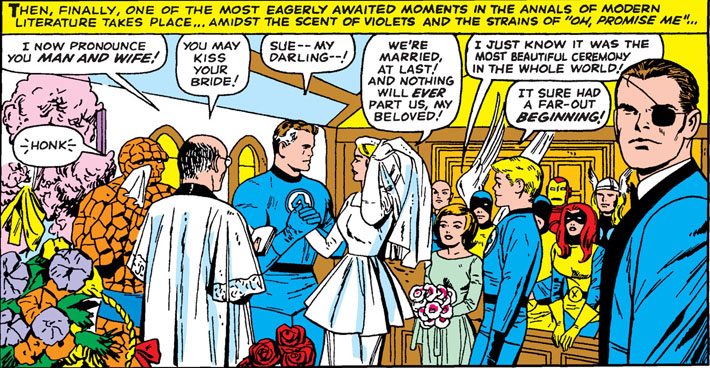
If the Fantastic Four already felt like a family before they became superheroes, Reed Richards and Sue Storm’s wedding made that family official. It also accomplished something that was almost unheard of in superhero comics during the 1960s—it allowed two major heroes to grow up.
Today, superhero weddings are fairly common, but in the Silver Age of comics they were a rarity. Publishers often avoided making lasting changes to their most popular characters, fearing that marriage would make them less exciting or somehow limit future stories. Stan Lee and Jack Kirby took a different approach.
Rather than keeping Reed and Sue in an endless cycle of dating, breakups, and reconciliations, they allowed their relationship to mature naturally. Readers watched their romance develop from the earliest issues of Fantastic Four, making their wedding feel less like a publicity stunt and more like the next chapter in their lives.
That chapter arrived in Fantastic Four Annual #3 (1965). Written by Stan Lee and illustrated by Jack Kirby, “The Wedding of Reed Richards and Sue Storm” became one of Marvel’s first major comic book events. Nearly every superhero in the Marvel Universe either attended the ceremony or tried to help the couple reach it after Doctor Doom and his allies attempted to ruin the celebration.
The wedding wasn’t memorable because of the guest list or even Doctor Doom’s interference. It mattered because Marvel made a bold promise to its readers: these characters would continue to grow. Marriage wasn’t the end of Reed and Sue’s story. It was the beginning of a new one.
I’ve always admired that Marvel let Reed and Sue’s relationship move forward instead of keeping them in an endless cycle of dating and breaking up. Watching their marriage grow over the years made the Fantastic Four feel more like real people than comic book characters.
Marriage Was Only the Beginning
Unlike many superhero marriages, Reed and Sue’s relationship was never intended to be a temporary storyline or a dramatic twist that would eventually be undone. It became the emotional foundation of the Fantastic Four itself. While many comic book couples eventually drifted apart—or found their relationships rewritten to restore an earlier status quo—Marvel continued allowing Reed and Sue to grow together as husband and wife. As their family expanded, so did the kinds of stories Marvel could tell, proving that lasting relationships could make superheroes even more compelling.
That decision helped distinguish the Fantastic Four from nearly every other superhero team of the era. Reed and Sue didn’t simply fight villains together—they built a life together. Their relationship wasn’t frozen in time. It evolved, just as real marriages do.
Of course, no marriage is without its challenges. Reed’s relentless scientific curiosity sometimes caused him to lose sight of the people closest to him, while Sue refused to be defined simply as “Mr. Fantastic’s wife.” As the years passed, she grew from the Invisible Girl into the confident and powerful Invisible Woman, becoming not only Reed’s partner in marriage but also his equal in leadership.
That growth became one of the defining characteristics of the Fantastic Four. Their greatest victories weren’t measured only by the villains they defeated or the worlds they saved. They were measured by the family they continued building together through every success, every setback, and every new stage of life.
The more Fantastic Four stories I’ve read, the more I’ve come to believe that Reed and Sue’s marriage remains one of Marvel’s boldest storytelling decisions. It proved that superheroes didn’t have to stay the same to remain interesting. Watching them grow together made the Fantastic Four feel less like comic book icons and more like a family readers could grow alongside.
Ben Grimm and Alicia Masters: A Love Story Decades in the Making
Love Beyond Appearances
If Reed Richards represents the mind of the Fantastic Four and Sue Storm its heart, then Ben Grimm is its soul. For more than sixty years, readers have watched Ben struggle with anger, guilt, loneliness, and self-doubt. Beneath his rocky exterior has always been a kind, fiercely loyal man who would risk everything for the people he loves. That’s one of the reasons Ben has remained one of Marvel’s most beloved characters. It’s also why his relationship with Alicia Masters became one of the emotional cornerstones of the Fantastic Four.
After the events of Fantastic Four #1 (November 1961), Ben paid the highest price for the team’s journey into space. While Reed, Sue, and Johnny gained powers they could celebrate, Ben was transformed into the Thing. Overnight, he lost the normal life he had known and became trapped in a body that frightened strangers and shattered his own self-confidence. Although his friends never stopped caring for him, Ben often struggled to believe that anyone could ever truly love him again.
Everything changed when he met Alicia Masters.
As I’ve worked my way through decades of Fantastic Four stories, Ben and Alicia have become one of my favorite couples in Marvel Comics. As a kid, I loved the Fantastic Four for their adventures. As an adult, I’ve come to appreciate that some of their greatest stories aren’t about defeating cosmic villains—they’re about ordinary people learning to love one another well.
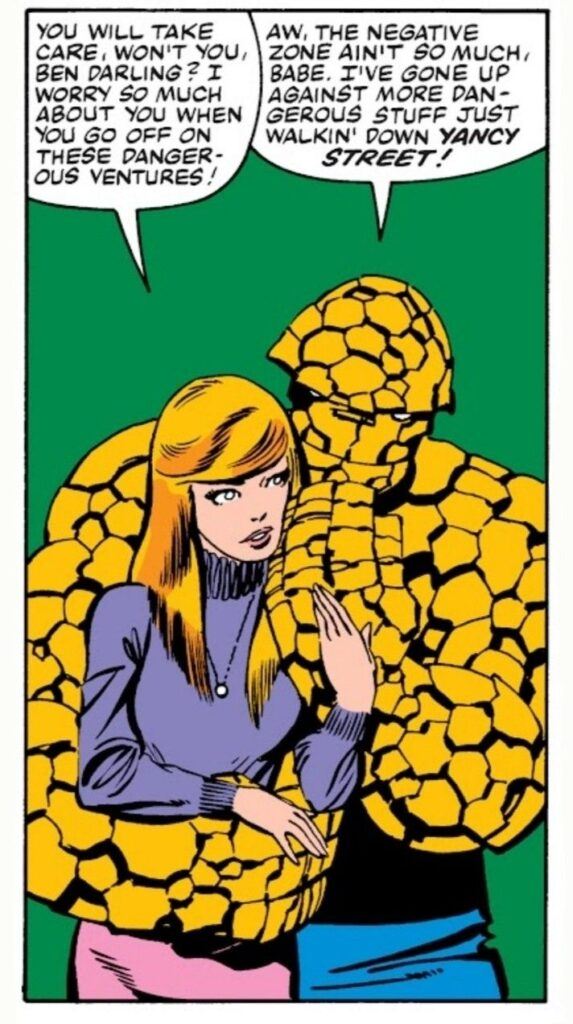
Introduced in Fantastic Four #8 (November 1962) by writer Stan Lee and artist Jack Kirby, Alicia was a gifted sculptor who had been blind since childhood. While others immediately saw the Thing’s rocky appearance, Alicia experienced Ben differently. She listened to his voice, recognized his kindness, and admired his courage. She fell in love with the man beneath the stone.
For Ben, Alicia’s love was almost impossible to accept.
He often questioned why someone as gentle and compassionate as Alicia would choose to be with him. Yet Alicia never tried to “fix” Ben or convince him to become someone else. She accepted him exactly as he was, reminding readers that true love isn’t based on appearances but on character.
That didn’t mean Ben gave up hope of becoming human again.
Reed Never Stops Searching for a Cure
In many ways, Reed Richards carried as much emotional weight from the accident as Ben did. Reed never stopped believing he was responsible for his friend’s transformation, and throughout the years he devoted countless hours to searching for a cure. Some solutions proved temporary, while others lasted a little longer before fate seemed determined to return Ben to his familiar orange, rock-like form.
One of the most significant breakthroughs came during John Byrne’s celebrated run on Fantastic Four. In Fantastic Four #245-246 (August-September 1982), Reed developed a device that allowed Ben to transform between his human form and the Thing at will. For the first time since the team’s origin, Ben could enjoy evenings with Alicia as Ben Grimm rather than the Thing. The couple even hoped this new beginning might someday allow them to have children of their own.
Sadly, that dream never became reality.
A Love Worth Waiting For
Like many real-life couples, Ben and Alicia faced seasons of heartbreak as well as happiness. At the conclusion of Marvel Super Heroes Secret Wars #1-12 (May 1984-April 1985), written by Jim Shooter with artwork by Mike Zeck and Bob Layton, Ben made a decision that surprised both his teammates and readers. While on Battleworld, he discovered he could once again become Ben Grimm at will. After years of believing he would spend the rest of his life trapped as the Thing, the opportunity to simply live as a normal man again was something he couldn’t bring himself to leave behind.
Believing he had finally found a place where he could reclaim the life he thought he’d lost forever, Ben remained on Battleworld. During his absence, Johnny Storm believed his friend had chosen a new life and gradually fell in love with the woman everyone thought was Alicia Masters. Years later, readers discovered she was actually Lyja, a Skrull agent impersonating Alicia while the real Alicia was held captive. It’s one of the most fascinating chapters in Johnny Storm’s life—and one we’ll explore in a future article—but for Ben and Alicia it became another obstacle their relationship ultimately overcame.
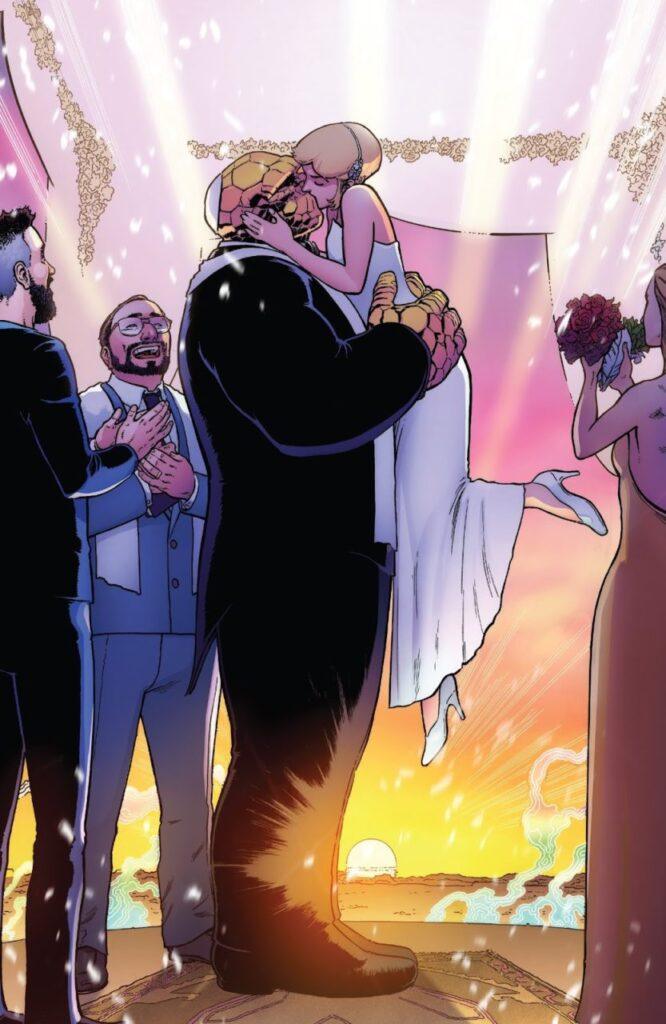
After decades of obstacles, Ben and Alicia finally received the happy ending readers had hoped for. In Fantastic Four (Vol. 6) #5 (November 2018), writer Dan Slott and artist Aaron Kuder brought the couple together in a long-awaited wedding that felt less like a surprise and more like the joyful conclusion to one of Marvel’s greatest love stories.
Or perhaps it was simply the beginning of another chapter.
Marriage gave Ben and Alicia the opportunity to build a family of their own. Their decision to adopt a Kree boy and a Skrull girl would become another powerful reminder that family isn’t defined by appearance, biology, or even centuries of conflict. It’s defined by love, commitment, and the willingness to choose one another every day.
To me, that’s Ben Grimm’s greatest contribution to the Fantastic Four. Reed’s genius can solve impossible scientific problems, and the family has faced threats that span the cosmos, but Ben and Alicia remind us that the greatest victories are often the most personal. Their love story helped transform the Fantastic Four from a remarkable superhero team into Marvel’s First Family.
Johnny Storm: More Than the Kid Brother
The Heart of the Family’s Humor
Every family has someone who keeps life from becoming too serious. In the Fantastic Four, that role has almost always belonged to Johnny Storm.
When readers first met Johnny in Fantastic Four #1 (November 1961), written by Stan Lee and illustrated by Jack Kirby, he was the youngest member of the team. As the Human Torch, Johnny could burst into flame with the now-famous words, “Flame on!” But while his powers made him one of Marvel’s most exciting heroes, it was his personality that made him an essential part of the Fantastic Four.
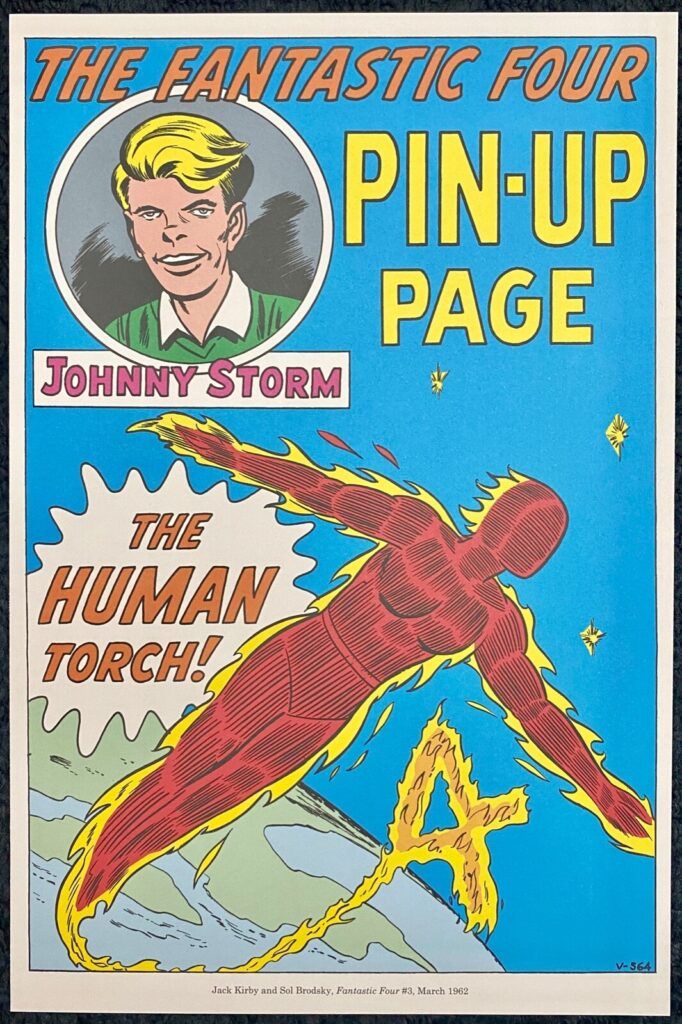
Johnny was impulsive. He loved fast cars, practical jokes, and showing off. He could be reckless one moment and incredibly brave the next. More often than not, he found himself trading insults with Ben Grimm. Their arguments became one of the Fantastic Four’s trademarks, with each trying to get the last laugh.
When I was a kid, I thought Johnny Storm was the coolest member of the Fantastic Four. After all, what kid didn’t want to shout, “Flame on!”? Looking back now, though, I admire him for entirely different reasons. Beneath all the jokes and showing off was someone who loved his family as fiercely as anyone in Marvel Comics.
Like many brothers, though, their constant teasing hid a deep affection.
When trouble came, Johnny and Ben stood shoulder to shoulder without hesitation. Their arguments rarely lasted long because neither ever questioned the other’s loyalty. Readers soon realized that watching Ben call Johnny “matchstick” or Johnny fire back with one of his own wisecracks wasn’t a sign of a fractured team—it was simply how this family showed its affection.
Perhaps Johnny’s most important relationship was with Sue.
Like many siblings, they occasionally argued and drove one another crazy, but Johnny never doubted how much his sister loved him. Sue wasn’t just a teammate. She was his protector, his confidante, and often the person who reminded him to think before acting. In many ways, Johnny never really outgrew being Sue’s kid brother—and that’s part of what made their relationship feel so genuine.
Growing Up with the Fantastic Four
As the Fantastic Four grew, so did Johnny.
He wasn’t simply “the kid” anymore. He became Uncle Johnny to Franklin and later Valeria Richards, happily embracing the role with the same enthusiasm he brought to everything else. Whether he was entertaining his niece and nephew, risking his life to protect them, or standing beside Reed and Sue during their most difficult moments, Johnny proved that family meant more to him than fame or adventure.
Like every member of the Fantastic Four, Johnny experienced heartbreak and disappointment. His complicated relationship with the woman he believed was Alicia Masters—and the later revelation that she was actually Lyja, a Skrull agent impersonating Alicia while the real Alicia was held captive—became one of the defining chapters of his life. It’s a remarkable story, and one we’ll explore in a future article.
Johnny’s romantic life eventually included fellow heroes, Inhumans, aliens, and even a woman who would one day become a Herald of Galactus. We’ll take a closer look at those relationships in a future article devoted to The Many Loves of Johnny Storm.
Johnny also developed one of Marvel’s greatest friendships with Spider-Man—a relationship filled with practical jokes, heartfelt moments, and unforgettable adventures. That’s another story we’ll save for a future article.
For this story, however, what matters most is Johnny’s place within the Fantastic Four.
He may have been the youngest member of the original team, but he grew into far more than the kid brother who loved to show off. He became the uncle who could always make Franklin and Valeria laugh, the brother who would stand beside Sue no matter the cost, the friend Ben could count on in a fight, and the trusted teammate Reed relied upon when the stakes were highest.
Every family needs someone who can make everyone smile after a difficult day. For more than sixty years, that someone has been Johnny Storm.
Reed and Sue Raise Marvel’s Most Extraordinary Children
Franklin Richards: A Child Unlike Any Other
If Reed Richards and Sue Storm’s wedding transformed the Fantastic Four into a family, the birth of their children allowed readers to watch that family continue to grow.
The arrival of Franklin Richards in Fantastic Four Annual #6 (November 1968), written by Stan Lee and illustrated by Jack Kirby, marked another milestone in Marvel history. Franklin wasn’t simply the son of two superheroes—he was one of the first children born to major Marvel heroes whose life would become an important part of an ongoing series.
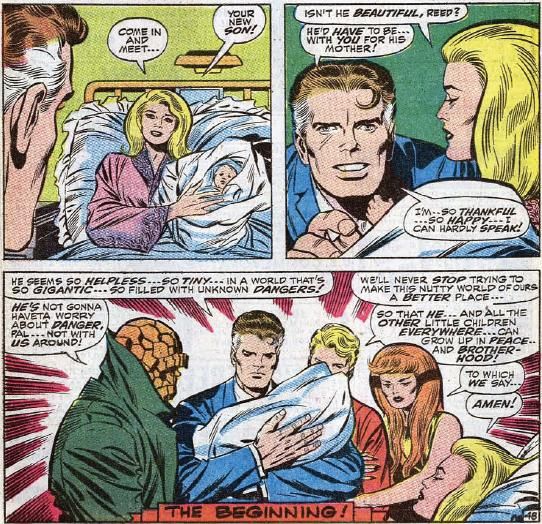
From the beginning, Franklin’s childhood was anything but ordinary.
His father was the world’s greatest scientific mind. His mother was one of Marvel’s most powerful heroes. His “uncles” included the ever-loving blue-eyed Thing and the Human Torch. Instead of worrying about ordinary neighborhood problems, Franklin grew up surrounded by visits from the Silver Surfer, battles with Doctor Doom, and adventures that stretched from the Negative Zone to the farthest reaches of the cosmos.
Yet Reed and Sue never wanted Franklin to be defined solely by his extraordinary circumstances.
Like any loving parents, they wanted him to experience the simple joys of childhood. They celebrated birthdays, comforted him when he was frightened, and did their best to create a home where he could simply be a little boy—even when the fate of the universe occasionally interrupted family dinner.
One of the things I’ve come to appreciate most about the Fantastic Four is that some of my favorite moments aren’t the cosmic battles at all. They’re the quieter scenes where Reed and Sue are simply being Mom and Dad. Those moments remind me that even Marvel’s most extraordinary family still faces many of the same joys and challenges every parent understands.
As Franklin grew older, it became clear that he possessed astonishing reality-warping abilities, making him one of the most powerful beings in the Marvel Universe. Yet no matter how extraordinary his gifts became—or how many cosmic beings took an interest in him—Reed and Sue never stopped seeing Franklin as their son before anything else.
Valeria Richards: The Genius in the Family
If Franklin inherited unimaginable power, Valeria Richards inherited an extraordinary mind.
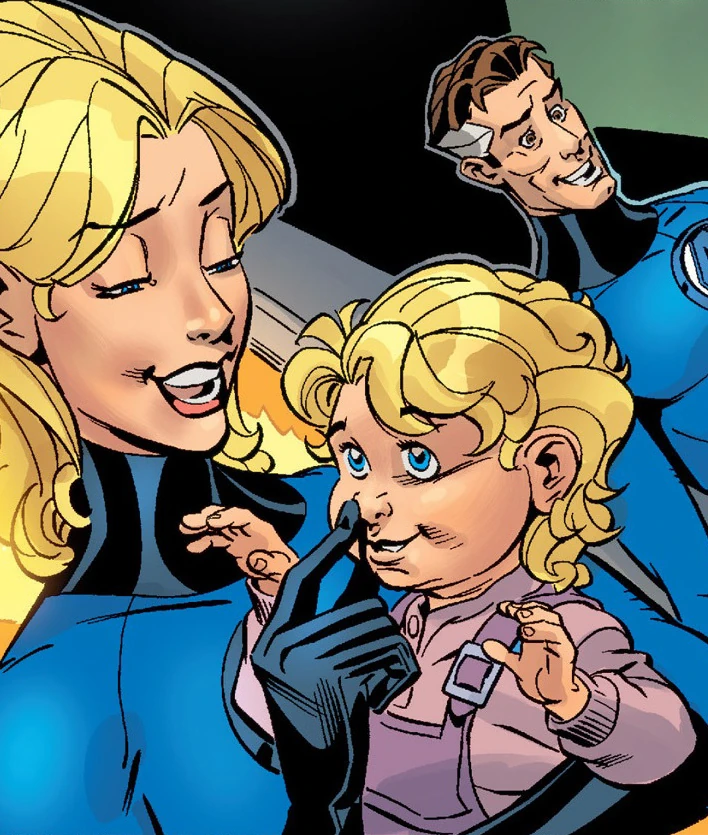
Following her remarkable birth in Fantastic Four (Vol. 3) #54 (June 2002) by writer Mark Waid and artist Mike Wieringo, Valeria quickly established herself as one of the brightest minds in the Marvel Universe. Even as a young child, she demonstrated an intellect capable of surprising—and occasionally humbling—her father.
Valeria also developed one of the most unusual relationships in Marvel Comics.
Doctor Doom, one of the Fantastic Four’s greatest enemies, became her godfather. Although his obsession with defeating Reed Richards never disappeared, Doom’s affection for Valeria revealed a side of his character rarely seen elsewhere. Their unlikely bond added another fascinating layer to the ongoing relationship between Doom and Marvel’s First Family.
Even in a family filled with scientific genius and cosmic power, Reed and Sue never lost sight of what mattered most. They wanted Franklin and Valeria to grow into compassionate, responsible adults—not simply extraordinary heroes.
Parenting While Saving the World
Perhaps that’s what makes Reed and Sue different from so many other superhero couples.
They never stopped being heroes.
But they also never stopped being parents.
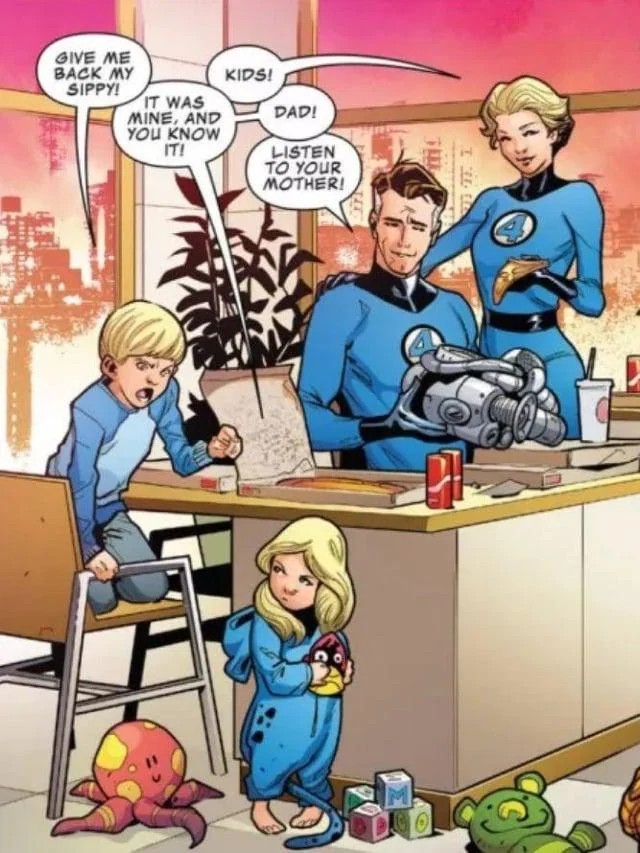
Whether they were facing Galactus, exploring the Negative Zone, or confronting Doctor Doom, they always carried the responsibilities of motherhood and fatherhood with them. Their greatest concern wasn’t simply saving the world—it was making sure Franklin and Valeria had a future worth growing up in.
That commitment never changed, even after Franklin’s powers grew to the point where he could create entire pocket universes. To Reed and Sue, he wasn’t a cosmic force to be controlled. He was still their little boy.
Readers watched the Richards children celebrate birthdays, learn difficult lessons, make mistakes, and gradually find their own places within the Marvel Universe. In doing so, they watched something almost unheard of in superhero comics: a family growing older together.
That’s one of the greatest reasons the Fantastic Four have endured for more than sixty years. Readers weren’t simply following four superheroes anymore. They were watching parents raise children, children grow into remarkable young adults, and a family continues to evolve from one generation to the next. Few comic book teams have ever been allowed to grow alongside their readers in quite the same way.
Ben and Alicia Expand the Meaning of Family
Choosing Family Over Conflict
By the time Ben Grimm and Alicia Masters married, readers had already watched their love story unfold over several decades. It would have been easy to assume their greatest adventures were behind them.
Instead, they became parents.
The more I’ve learned about Ben and Alicia’s story, the more I think this was the perfect ending—or perhaps the perfect new beginning—for their relationship. After everything they’d endured together, it’s fitting that their greatest adventure wasn’t another battle. It was building a family.
Unlike Reed and Sue, Ben and Alicia’s path to parenthood came through adoption, reminding readers that family is built through love and commitment as much as through biology. Their decision would also connect directly to one of the oldest conflicts in Marvel’s cosmic history.
Two Children, One New Family
For countless generations, the Kree and the Skrulls had been bitter enemies. Their war stretched across the stars, claiming countless lives and shaping the destiny of entire civilizations. The Fantastic Four had encountered both races many times over the years, witnessing firsthand how hatred and mistrust had been passed from one generation to the next.
That ancient conflict became deeply personal in Fantastic Four (Vol. 6) #25 (December 2020) by writer Dan Slott and artist R.B. Silva. While on a mission with the Fantastic Four, Ben encountered two orphaned children whose lives had been consumed by generations of hatred. Jo-Venn, a young Kree boy, and N’Kalla, a Skrull girl, had been forced into a brutal existence where they were expected to battle one another to the death while spectators placed wagers on which child would survive.
To those exploiting them, the children were nothing more than contestants in a deadly game.
Ben saw something entirely different. He saw two frightened children who deserved far more than the lives they had been forced to endure.

When Ben returned home, he and Alicia made a life-changing decision. Rather than allowing Jo-Venn and N’Kalla to become the next generation of a centuries-old war, they opened their home and their hearts, choosing to raise them as their own son and daughter.
Their decision to adopt Jo-Venn and N’Kalla wasn’t simply an act of kindness. It rejected everything the Kree-Skrull War had taught these children to believe. Rather than continuing an ancient conflict, Ben and Alicia chose to raise them as brother and sister.
The adoption wasn’t without challenges. Like many siblings, Jo-Venn and N’Kalla argued, competed, and occasionally drove each other—and their parents—crazy. In their case, those disagreements were complicated by generations of inherited prejudice between their two peoples.
Yet that’s exactly what made the story so meaningful.
Ben Grimm, who once believed no one could ever love him because of his appearance, and Alicia Masters, who had always looked beyond appearances, opened their home to two children from opposite sides of an ancient war. Rather than allowing the past to define them, they gave Jo-Venn and N’Kalla the opportunity to define their own future.
I can’t think of a better example of why they’re called Marvel’s First Family. Their greatest victories haven’t always come through defeating villains or saving worlds. Sometimes they’ve come from choosing compassion over fear, hope over hatred, and family over division.
Marvel’s First Family
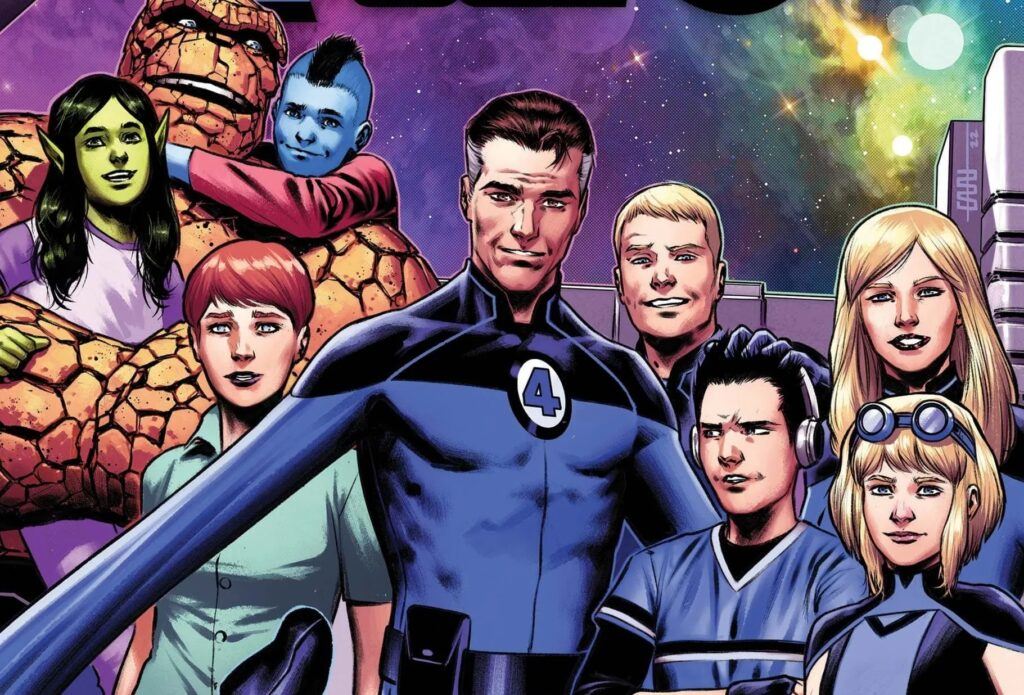
When I sat down to write this article, I thought back to those Saturday mornings watching the Fantastic Four cartoon as a kid. I also remembered the smile on my granddaughter’s face when I told her I was writing about Marvel’s First Family. More than sixty years separate those two memories, yet they share something remarkable in common: the Fantastic Four still inspire generations of fans.
Looking back over the team’s history, it’s easy to see why.
The Fantastic Four didn’t become Marvel’s First Family simply because Reed Richards married Sue Storm or because Johnny Storm was Sue’s younger brother. They earned that title because readers were invited to watch a family grow in ways that few comic book characters ever have.
Friends became brothers.
Sweethearts became husband and wife.
A married couple became parents.
A lonely man found unconditional love.
Two children from opposite sides of an ancient war found a place to call home.
With every new chapter, the Fantastic Four became a little more like the families we know in our own lives—not perfect, but loving, resilient, forgiving, and committed to one another through every triumph and heartbreak.
Perhaps that’s the real meaning of the word “first.”
The Fantastic Four helped launch the Marvel Age of Comics in 1961, but they also became first in another way. They set the standard for what a superhero family could be. Long before superhero families, legacy heroes, and multigenerational storytelling became common, Reed, Sue, Johnny, and Ben were showing readers that the greatest adventures aren’t always found in distant galaxies or epic battles. Sometimes they’re found around the family dinner table, in the quiet moments between crises, and in the unwavering love that keeps a family together.
For more than six decades, Marvel has introduced countless heroes, teams, and cosmic champions. Yet whenever someone speaks of Marvel’s First Family, everyone knows exactly who they mean.
That’s a legacy no amount of cosmic power can ever replace.
Continue Your Fantastic Four Journey
If you enjoyed this article, you might also enjoy these other Fantastic Four features here on Super Hero Collectors.
Read Next
- Marvel’s First Family: The Origins and Rise of the Fantastic Four
- The Fantastic Four’s Greatest Villains: A Legacy of Conflict
- The Fantastic Four’s Cosmic Encounters: Galactus and Beyond
- Who Was the First Marvel Superhero? (Learn why the Fantastic Four launched the Marvel Age of Comics.)
Coming Soon
- The Many Loves of Johnny Storm
- Johnny Storm and Spider-Man: Marvel’s Most Unlikely Friendship
- The Kree-Skrull War Explained
- Heralds of Galactus
- The End of All Things: The Fantastic Four vs. the Griever
What makes the Fantastic Four special to you may be completely different from what makes them special to me—and that’s one of the joys of being a comic book fan.
I’d love to hear from you. If you have a favorite Fantastic Four family moment—or a comic issue that has always stood out to you—share your thoughts in the comments below. Which member of Marvel’s First Family has always been your favorite, and why?
As someone who has always loved Marvel Comics, I’ve long considered the Fantastic Four one of the true classics. What makes them stand out for me isn’t just the cosmic adventures or the battles with villains like Galactus and Doctor Doom; it’s the way they’ve always been portrayed as a family first. Watching Reed and Sue grow together, seeing Ben and Alicia’s love story unfold, and following Johnny’s journey from impulsive kid brother to devoted uncle really shows how Marvel allowed these characters to evolve in ways that felt real and relatable.
I think that’s why the Fantastic Four still resonate across generations; they remind us that even in the middle of saving the universe, family bonds are what truly endure.
Which storyline do you think best captures that balance between superhero action and heartfelt family moments?
Thanks, Alice! I really enjoyed reading your thoughts. I think you captured exactly what has made the Fantastic Four unique from the very beginning. Their powers may have made them superheroes, but it’s their relationships that have kept readers invested for more than sixty years.
That’s a great question! If I had to choose one storyline, I’d probably go with the original Galactus Trilogy (Fantastic Four #48–50). It has the epic superhero action everyone remembers, but it’s also driven by very personal moments—Alicia’s compassion for the Silver Surfer, the team’s willingness to sacrifice for one another, and Reed making an impossible moral decision for the good of the universe.
For a story that’s even more focused on family, I’d also recommend Fantastic Four Annual #3, which features the wedding of Reed Richards and Sue Storm. It isn’t just a wedding issue—it’s a celebration of the entire Marvel Universe and marks the moment the team’s family identity truly became part of who they are.
Thanks for sharing your perspective and for taking the time to leave such a thoughtful comment!
I hope you come back for more superhero fun!
– Scott
Hi there,
Thank you for another enjoyable article. I’ve always thought the Fantastic Four stood apart from many other superhero teams because they truly feel like a family first and a team second. Their personalities, disagreements, and loyalty to one another make them more relatable than many comic book heroes.
I also find it interesting how they helped shape the Marvel Universe that followed. Many of the characters and storylines that came later seem to build upon the foundation they established.
I’m curious, if you had to introduce someone completely new to the Fantastic Four, which storyline or graphic novel would you recommend they start with, and why?
Thanks again for another great read!
Thanks, Bryce! I’m glad you enjoyed the article.
I agree completely that the Fantastic Four are a family first and a superhero team second. That’s what has kept them interesting for more than sixty years. They don’t always agree, but they’re always there for one another when it matters most.
If I were introducing someone to the Fantastic Four for the first time, I’d probably recommend the Galactus Trilogy (Fantastic Four #48–50). It has just about everything that makes the team special: family dynamics, exploration, impossible odds, and the introduction of iconic characters like Galactus, the Silver Surfer, and the Watcher. It’s a story that shows why the Fantastic Four became the foundation for so much of Marvel’s cosmic universe.
For readers who enjoy older comics, I’d also encourage them to go back to Fantastic Four #1 and watch Stan Lee and Jack Kirby build the Marvel Universe almost one issue at a time. It’s amazing how many heroes, villains, and concepts made their first appearance in those early issues. This is where I started when I came back to the comics as an adult.
Thanks again for the thoughtful question and for following along with the series. I always enjoy reading your comments!
I hope you come back for more superhero fun!
– Scott
What a fascinating look at why the Fantastic Four earned the title of “Marvel’s First Family.” I think what makes them so special is that, beneath all the incredible powers and adventures, they have always been about relationships, teamwork and the challenges of being a family.
This article also resonated with me because the CEO of the company I’m part of is a huge superhero fan! On many of his webinars, there’s a whole shelf of superhero figures behind him, which always adds a fun and memorable touch. It’s interesting how these characters inspire people far beyond the comic world – representing creativity, courage, innovation and the belief that we can make a difference.
Do you think the family dynamic is the main reason the Fantastic Four have remained so beloved over the years, or is it their role as pioneers in the Marvel universe that has created their lasting legacy? Or both?
Hi Lucie,
Thank you for such a thoughtful comment! I enjoyed reading your perspective, and I love the image of your CEO’s shelf full of superhero figures. It’s a reminder that these characters often inspire people well beyond the pages of comic books.
I think you actually answered your own question—it’s both.
The Fantastic Four were pioneers because they helped launch the Marvel Universe as we know it, but I don’t think that alone would have kept them popular for more than 60 years. What makes them unique is that they’re a family first and a superhero team second. They argue, celebrate, support one another, and sometimes even disagree on how to solve a problem. Those relationships make them feel more human than many other superhero teams.
I also think that’s why so many readers continue to connect with them across generations. Their adventures may involve Galactus or Doctor Doom, but at the heart of every story is a family trying to navigate life together.
Thanks again for sharing your thoughts and for adding such an interesting question to the discussion!
I hope you will come back for more superhero fun!
– Scott
Scott,
One thing that really stood out to me while reading this was how willing Marvel was to let the Fantastic Four actually move forward instead of constantly resetting them back to the status quo. Reed and Sue got married, Franklin and Valeria grew up, Ben eventually married Alicia, and the family kept evolving while many other comic characters seemed frozen in time.
I think that’s part of what makes them feel so much more relatable than a lot of superhero teams. Readers weren’t just following adventures—they were watching people go through different stages of life, almost like catching up with old friends every few years.
It also makes me wonder whether that’s something modern comics have become a little afraid of. Sometimes it feels like major changes eventually get reversed so iconic characters stay recognizable, whereas the Fantastic Four built much of their identity by allowing those changes to stick.
Really enjoying this series. It’s making me appreciate just how much of today’s Marvel Universe was built on the foundation Lee and Kirby created with this family.
Jeremy
Thanks, Jeremy! I think you’ve hit on one of the biggest reasons the Fantastic Four have remained so compelling over the years.
Marvel really did allow them to grow in ways that most superhero teams never have. Reed and Sue’s marriage endured, Franklin and Valeria became important characters in their own right, and Ben and Alicia’s relationship finally culminated in marriage after decades of development. Those milestones gave readers the feeling that time was actually passing and that the characters’ experiences mattered.
I also think your observation about modern comics is an interesting one. Many major characters eventually return to a familiar status quo, but the Fantastic Four have generally been allowed to keep many of the changes that define them. That’s one reason they continue to feel like a real family instead of simply a team that happens to work together.
I’m really glad you’re enjoying the series! The more I revisit these stories, the more I appreciate just how many ideas, characters, and themes Stan Lee and Jack Kirby introduced that still shape Marvel today. Thanks again for following along and for sharing another thoughtful comment!
More superhero fun is coming soon!
– Scott
The part about Ben and Alicia adopting Jo-Venn and N’Kalla really stayed with me. Bringing home two children who had been raised to see each other as enemies must have involved much more than simply giving them a safe place to live. I imagine even ordinary family moments, such as sharing meals, choosing their rooms, learning to trust one another, or being introduced as brother and sister, would have been difficult at first. Ben seems especially suited to understand what it feels like to be judged before anyone truly knows you. Did the comics ever spend much time showing how the children adjusted to everyday life on Earth, beyond their connection to the Kree-Skrull conflict?
Thanks, Hanna! I’m really glad you brought up Jo-Venn and N’Kalla because they’re one of my favorite additions to the Fantastic Four’s extended family.
You make a great point that their story doesn’t end with the adoption. Ben and Alicia weren’t just giving two children a home—they were bringing together a Kree boy and a Skrull girl who had been taught to see each other as enemies. That’s a wonderful picture of what family can accomplish when love is stronger than prejudice.
The comics do spend some time showing them adjusting to life on Earth, although the focus is usually on the family dynamics rather than everyday slice-of-life moments. We see Ben and Alicia raising them with patience and encouragement, and over time the children come to think of each other as true brother and sister instead of representatives of rival empires. I would actually love to see Marvel devote even more stories to those quieter family moments, because I think that’s where the Fantastic Four have always been at their best.
I also love your observation about Ben. Few people understand being judged by appearances better than he does, so he’s uniquely equipped to help Jo-Venn and N’Kalla see beyond old prejudices. That’s one of the reasons I think their adoption fits Ben and Alicia’s characters so perfectly.
Thanks again for another thoughtful comment. I always enjoy the questions you bring to these discussions!
Please come back for more superhero fun!
– Scott
Hey Scott,
You obviously know your stuff when it comes to comic books, and going deeper behind the scenes with each superhero.
My nephew is a huge comic book fan, especially the fantastic four. So I am going to share this article with him and encourage him to feedback through a comment, and if he has any questions then he should get in touch with you. If that is OK?
Keep up the great work and sharing such interesting articles on your great website.
All the best,
Tom
Hi Tom,
Thank you for the nice comment. It certainly would be great to hear from your nephew. Marvel comics fans are always welcome and I love the engagement!
– Scott
I’ve always known who the Fantastic Four were, but I never knew much about their backstory. This was a fun and informative read.
After reading this article I can definitely see why they are considered such a crucial part of Marvel history.
I’m looking forward to the new movie. Is there anything you are hoping to see in the new movie that pervious versions missed?
Thanks, Heather! I’m glad you enjoyed the article and found it helpful. The Fantastic Four really are the foundation that so much of the Marvel Universe was built upon, and it’s been fun revisiting their history while writing this series.
As for the upcoming movie, what I hope to see more than anything is the family dynamic. The action and visual effects are always exciting, but the Fantastic Four have never been at their best because of their powers alone. They’re at their best when you see Reed and Sue balancing leadership with family, Ben’s unwavering loyalty despite his struggles, and Johnny bringing both humor and heart to the team.
I’d also love to see the movie capture that sense of exploration and discovery that made the early comics so special. The Fantastic Four aren’t just superheroes—they’re explorers venturing into the unknown, and that’s a big part of what has always set them apart.
Thanks again for reading and for leaving such a thoughtful comment! Please come back for more superhero fun!
– Scott
I really enjoyed this article! I think you did a great job explaining why the Fantastic Four are called Marvel’s First Family by focusing on their relationships instead of just their superpowers. Your sections on Reed and Sue’s marriage and Ben and Alicia’s journey really highlighted how these characters have grown over the years, which is something that sets them apart from many other superhero teams. It reminded me that some of the best Marvel stories are the quieter, character-driven moments between all the action. Which family storyline has been your favorite to write about so far, and is there another Fantastic Four relationship you plan to explore in a future article?
Thanks so much, Lisa! I’m really glad that came across because that was exactly what I wanted this article to emphasize. The Fantastic Four certainly have incredible powers, but it’s their relationships that have kept readers invested for more than sixty years.
That’s a great question! I think my favorite relationship to write about so far has been Ben Grimm and Alicia Masters. Their story is one of acceptance, loyalty, and unconditional love, and I think it captures the heart of what makes the Fantastic Four different from so many other superhero teams.
As for future articles, I definitely have a few relationships in mind. Johnny Storm has a fascinating history that deserves its own post—from his friendships with Spider-Man and Wyatt Wingfoot to the many twists and turns in his love life. There are also stories involving Franklin and Valeria that show how the next generation continues the family’s legacy.
Thanks again for reading and for such an encouraging comment. I appreciate you following along with the series, and I hope you come back for more superhero fun!
– Scott
I believe the Fantastic Four has always been a great family, and continue to be even though they have their own unique families. Either than them, the next family I have always admired from the Marvel Cinematic Universe is the X-Men. It’s a different family but they always looked out for each other. This is a great post. Thank you for sharing.
Thanks so much! I’m glad you enjoyed the article.
I like your comparison with the X-Men. While they’re a very different kind of family, they also create strong bonds through shared experiences and looking out for one another. The Fantastic Four are connected by blood and marriage, while the X-Men are more of a chosen family, but both teams show that trust and loyalty are just as important as superpowers.
For me, what has always made the Fantastic Four unique is that their family relationships aren’t something added to the stories—they’re the foundation of every adventure. Whether they’re facing Doctor Doom, Galactus, or just the challenges of everyday life, they approach it as a family first and superheroes second.
Thanks again for reading and for taking the time to leave such a kind comment! I hope you will come back for more superhero fun!
– Scott
I did enjoy reading this article, Scott. What stood out for me mostly is that you did not just explain why the Fantastic Four are called Marvel’s First Family. You showed how decades of relationships, growth, sacrifice, marriage, and parenthood earned them that title.
…and the personal memories about watching the cartoon as a child and your granddaughter’s excitement added warmth and made the article feel genuine rather than purely informational.
I have a couple of questions. Which single comic issue do you think best captures the idea of the Fantastic Four as a family rather than just a superhero team? Also, do you think Marvel has done a good job preserving that family identity in its more recent comics, or has the focus shifted compared to the classic Stan Lee and Jack Kirby era?
John
Thanks so much, John! I really appreciate your kind words. I’m glad the personal memories resonated with you. I wanted readers to know why the Fantastic Four have meant so much to me over the years, not just present the facts.
Those are great questions! If I had to pick a single issue that captures the Fantastic Four as a family, I’d probably choose Fantastic Four Annual #3, the wedding of Reed Richards and Sue Storm. On the surface it’s a wedding issue, but it represents so much more. You see the entire Marvel Universe come together to celebrate them, while Doctor Doom tries to ruin the day. Even in the middle of the action, the story is really about two people building a family, and I think that’s the moment the title “Marvel’s First Family” truly begins to take shape.
As for modern comics, I think Marvel has done a good job preserving that identity. The details have changed over the years, but the core has remained the same. Writers like Jonathan Hickman, Mark Waid, Ryan North, and Dan Slott have all approached the team differently, yet each understood that the Fantastic Four work best when the family comes before the superpowers. That’s one of the reasons they’ve remained relevant for more than sixty years.
Thanks again for reading and for taking the time to leave such thoughtful questions. I’ve really enjoyed the discussions these articles have generated!
I hope you come back for more superhero fun!
– Scott
My second son loves watching superhero movies and shows, so I’ve watched a lot of them with him over the years. It’s been fun seeing why the Fantastic Four are considered Marvel’s first family and how their teamwork makes them stand out from other superhero groups. Do you think the upcoming Fantastic Four movie will stay true to what makes them so special in the comics?
Thanks, Monica! I love that you’ve been able to share superhero movies with your son. It’s always fun when they become something families can enjoy together.
I’m hopeful that the upcoming Fantastic Four appearance captures what has always made the team special. The action and visual effects are important, but for me, the heart of the Fantastic Four has never been their powers—it’s their relationships. If the movie shows Reed and Sue’s partnership, Ben’s unwavering loyalty despite his struggles, and Johnny’s growth from the impulsive younger brother into someone who would do anything for his family, I’ll be very happy.
That’s really what has set the Fantastic Four apart since 1961. They’re superheroes, but they’re also a family that loves one another, argues with one another, and sticks together through everything. If the filmmakers keep that at the center of the story, I think they’ll have captured the spirit of the comics.
Thanks again for reading and for leaving such a thoughtful comment!
Please come back for more superhero fun.
– Scott
The family dynamic is really what makes this piece stand out. Rather than treating “First Family” like just a nickname, it shows how the Fantastic Four grew into something that feels lived-in, messy, and genuinely human.
I also like how you connect their personal relationships to the bigger Marvel legacy without getting too stiff or academic. One thing I’m curious about is whether you see that family-first angle as even more important than their role in launching the Marvel Age?
Thanks, Aly! That’s a really thoughtful question.
For me, I don’t think those two ideas can really be separated. The Fantastic Four were certainly the team that launched the Marvel Age, but I think one of the biggest reasons they succeeded is because they were a family. Stan Lee and Jack Kirby created heroes who argued, made mistakes, cared deeply for one another, and still found a way to work together. That felt very different from most superhero comics at the time.
If they had simply been another superhero team, I don’t think they would have left the same lasting impact. Their family dynamic wasn’t just something that came later—it was one of the qualities that helped redefine what Marvel stories could be.
In many ways, I think that’s why they’re still called Marvel’s First Family more than sixty years later. They didn’t just arrive first; they established a model of character-driven storytelling that influenced countless heroes and teams that followed.
Thanks for another great question and for taking the time to share your thoughts!
I hope you come back for more superhero fun!
– Scott
I’ve watched so many Marvel characters grow and mature over the decades, but Fantastic Four was one branch I never really followed that well. Oh, I’d seen the many movie adaptations, but they never really fleshed out the story like your article did. I do remember the early comic versions, and like all Marvel Universe characters, they all started out much more simplistic, good-v-evil stories. Magneto was *bad*, Prof Xavier was *good*. And over time you realize that things are just not that simple. I see it’s the same with FF, too. And that’s true of life in general, no? I sometimes pick up graphic novels at the store and I might just peruse through the Four section a little more carefully next time. Thanks for taking the time to teach me something I didn’t know.
Thanks so much, Don! I really enjoyed reading your perspective.
I think you’ve touched on one of the biggest strengths of Marvel comics. The early stories often began with fairly clear lines between heroes and villains, but over time those lines became much more nuanced. The Fantastic Four are a great example of that. Their adventures gradually evolved beyond simple good-versus-evil conflicts into stories about family, responsibility, sacrifice, and difficult moral choices.
You’re also right that the movies can only scratch the surface. A two-hour film simply doesn’t have the room to show decades of character growth, relationships, and the many ways the Fantastic Four have changed over the years. That’s one of the reasons I enjoy going back to the comics—they reveal so much more about who these characters are.
If you decide to explore some of the graphic novels, I’d recommend starting with the original Galactus Trilogy or Fantastic Four: Behold… Galactus!, which collects those classic issues. It’s one of the stories that really demonstrates why the Fantastic Four became such an important part of Marvel history.
Thanks again for reading and for your kind words. It means a lot to know the article sparked your interest in exploring the Fantastic Four a little further!
Please come back for more superhero fun!
– Scott